µ
Micro & panfish
Crappie, bluegill, ice and trout. Tiny body, clean hook gap, low total weight and movement that happens without hard rod input.
See the micro end →
A buyer's guide for a category that got complicated fast
Urchin baits now run from 5 mm micro bodies for panfish to full-size suspended-bass profiles with long arms, purpose-built hooks and internal weights. Two baits can both be called “Urchins” and fish nothing alike. This site is here to help you sort that out before you spend money.
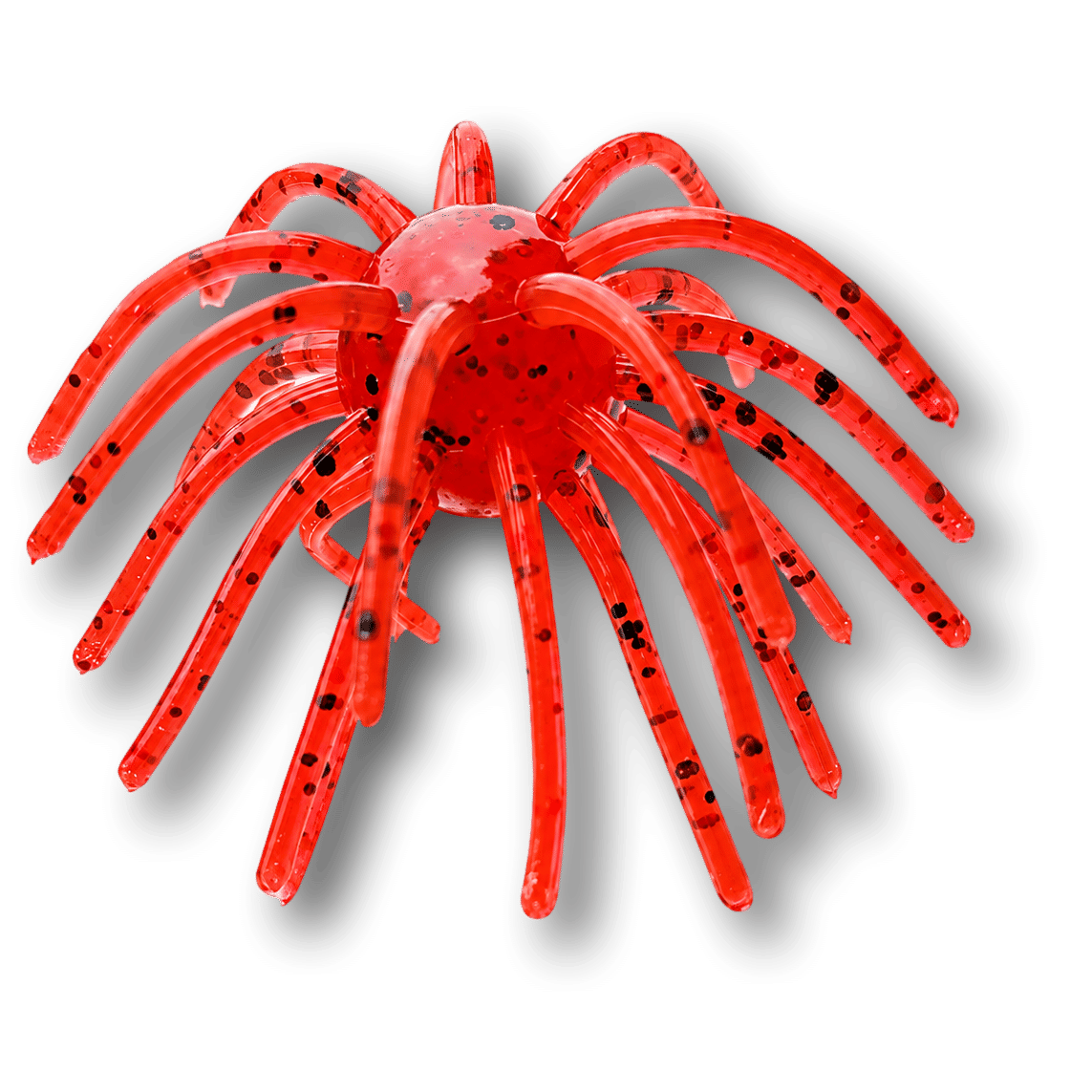
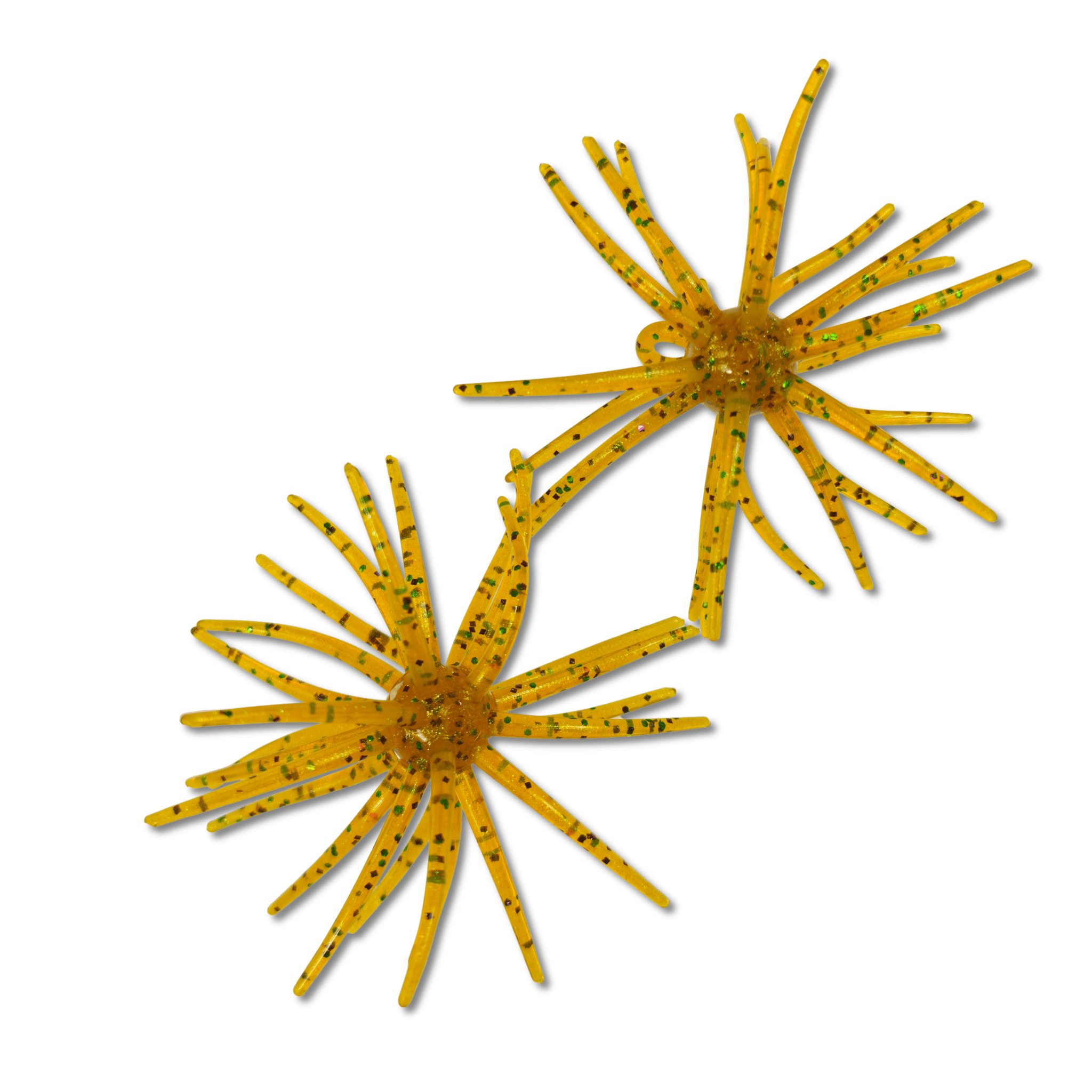
Do not buy by color first. Compare the center body, outside span, arms, material and hook fit. Those five things tell you far more about how the bait will fish.
A buyer can narrow this category surprisingly fast by answering four questions: what fish, what presentation, how much profile, and how much total rig weight. Brand comes later.
Crappie, bluegill, ice and trout. Tiny body, clean hook gap, low total weight and movement that happens without hard rod input.
See the micro end →Smaller-to-mid profiles for dropshot, light jigheads, hover work and pressured fish. Enough body to rig cleanly without turning into a full-size target.
Build a finesse setup →Balanced profiles that can hang, glide or fall slowly around fish you can see—or around docks and cover you cannot.
Match the suspended job →Longer arms and a larger center body for fish that respond to silhouette and presence as much as subtle movement.
Compare bigger profiles →There is no industry-standard profile taxonomy yet, so we use plain-English descriptions. The point is not the name. The point is what the body and arms do in the water.
Round center, moderate outside span, fairly even arms. A versatile middle ground for dropshot, light weighted rigs and general finesse work.
Usually gives you:Smaller center with longer arms and more open space between them. The arms show movement without creating as much total bulk.
Usually gives you:Lots of arms around the center body. More material catches more water, slows transitions and creates a larger visual target.
Usually gives you:Tiny center with fine appendages. Built for subtle movement, tiny hooks and species that inspect a small meal at close range.
Usually gives you:Many Japanese-origin listings use the center-body diameter. Many U.S. listings use overall length or a product-family size. Some do not make the measurement method obvious at all.
The center body controls hook clearance, how much material the hook has to pass through, and how easily you can place internal or centerline weight.
Examples in the current market include 5 mm and 9 mm micro bodies, 13 mm and 17 mm finesse bodies, and 23–25 mm full-size centers.
Tip-to-tip span controls how large the bait looks in the water. Longer arms can make a tiny body present much bigger than the center measurement suggests.
When a U.S. listing says 1.25, 1.75, 2.5 or 3.6 inches, verify whether that number is overall span or another maker-specific convention.
Material changes durability, buoyancy, arm recovery, how a bait holds a hook, how quickly it sinks, and even how you store it.
Current 2026 testing has documented meaningful differences between high-floating TPE Urchins and dense traditional soft-plastic versions, especially in durability and fall rate.
Urchins are unusually sensitive to where the hook and weight sit. Move the weight, change the line angle or bury too much hook gap and you can change the entire presentation.
| Presentation | Profile priorities | Hardware priorities | Common mistake |
|---|---|---|---|
| Micro jig | Small center, fine arms, minimal bulk | Exposed gap, light jighead | Using a body too thick for the hook |
| Float / pendulum | Fine arms, slow fall, balanced body | Minimal added weight | Overworking the bait |
| Dropshot | Compact or micro; movement at rest | Small hook, clean nose/center rigging | Too much body around the point |
| BFS | Compact profile with enough rig mass | Total rig weight matched to rod | Assuming “small” automatically casts well |
| Hover / suspended | Balanced body, long responsive arms | Centered weight and hook | Nose-heavy rigging that kills glide |
| Full-size spiky ball | Large silhouette, arm motion, stable center | Purpose-fit hook and internal weight | Undersized hook or hidden points |
A great color cannot fix the wrong body size, fall rate or hook clearance.
Millimeters may describe the center body while inches may describe the whole bait.
A buoyant elastomer and a salted plastisol version can fall and recover very differently.
The center has to fit the hook gap. Too little exposed gap costs fish.
The biggest tournament profile may be completely wrong for crappie, BFS or a light dropshot.
There is no single “best” Urchin for every job. A better first purchase is the profile that matches the water you actually fish.
Start with a micro body that cleanly fits your tiny jighead or dropshot hook. Fine arms and low total weight matter more than a huge outside span.
Start in the compact middle: enough body to rig securely, enough arm span to slow and show, but not so much bulk that it overwhelms a light hook.
Start with a balanced mid-to-full profile and pay close attention to centered weight placement, fall rate and exposed hook points.
Choose a profile you can cast and skip consistently, with enough durability to survive cover contact and enough hook exposure to land fish without perfect sonar positioning.
The goal is for you to arrive at the category already knowing whether you want micro, compact, dense, sparse, buoyant, fast-falling, hover-oriented or full-profile. Then shopping becomes useful instead of random.
The category has expanded quickly in 2026. Major outlets are now testing multiple Urchin models, manufacturers are releasing dedicated sizes and materials, and purpose-built hooks and weights have become their own tackle category.
That is the whole job of BuyUrchinBaits.com.